Vertical Expansion: Maximising Development Yield Through Strategic Rooftop Construction
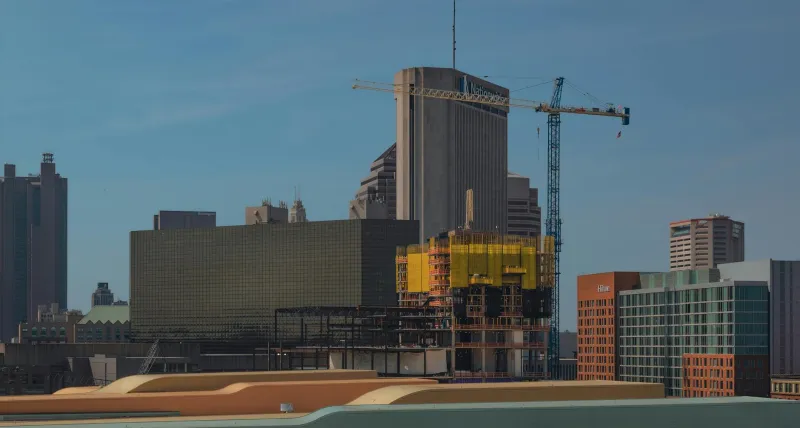
The Overlooked Asset Class
Whilst property developers scour Britain for available land, millions of square metres of potential development space remain unutilised directly above existing buildings. Rooftop development represents perhaps the most pragmatic solution to urban housing shortages, offering immediate access to buildable space without the complexity and cost of land assembly.
The mathematics are compelling. Central London alone contains approximately 600,000 buildings, many of which could accommodate additional storeys without compromising structural integrity or planning policy objectives. Similar opportunities exist across Manchester, Birmingham, Leeds, and other major urban centres where land values make conventional development increasingly challenging.
 Photo: Central London, via www.maminkam.cz
Understanding Airspace Rights
Airspace development operates on fundamentally different principles from traditional land-based construction. Rather than acquiring freehold land, developers purchase or lease the three-dimensional space above existing buildings, often from freeholders seeking to monetise previously worthless assets.
These transactions can take various forms. Outright purchase of airspace provides maximum development control but requires significant upfront investment. Alternatively, revenue-sharing arrangements allow developers to proceed with minimal initial outlay whilst providing building owners with long-term income streams.
Lease-based structures offer particular flexibility, enabling developers to secure development rights for extended periods whilst preserving freeholders' ultimate ownership. This approach proves especially attractive for pension funds and institutional investors seeking stable, long-term returns from property assets.
Engineering and Structural Considerations
Successful rooftop development begins with comprehensive structural analysis. Victorian and Edwardian buildings often possess substantial load-bearing capacity due to over-engineered foundations and thick masonry walls. However, post-war construction frequently utilised lighter materials and more efficient structural systems that may limit additional loading.
Modern engineering solutions can overcome many structural limitations. Lightweight construction methods, including cross-laminated timber and steel frame systems, minimise additional loads whilst providing excellent thermal performance. Advanced foundation techniques can transfer loads around existing structures, enabling development even where original foundations appear inadequate.
Building services integration requires particular attention. Existing buildings may lack capacity for additional electrical, water, and heating demands. However, rooftop developments can often incorporate independent systems, including solar panels, rainwater harvesting, and dedicated heating installations that actually reduce overall building energy consumption.
Planning Policy Evolution
Britain's planning system has gradually recognised rooftop development's potential through expanded permitted development rights. The 2020 amendments allow additional storeys on residential buildings up to specified heights, whilst commercial-to-residential conversions can include rooftop extensions under certain circumstances.
These permitted development rights eliminate many traditional planning obstacles, enabling developers to proceed without full planning applications provided they comply with specific technical requirements. However, successful schemes require careful attention to design quality, neighbour consultation, and building regulation compliance.
Local planning authorities increasingly support well-designed rooftop development as a means of achieving housing targets without greenfield land release. Forward-thinking councils have developed specific policies encouraging airspace utilisation, particularly in areas with good transport connectivity and existing urban infrastructure.
Financial Modelling and Returns
Rooftop development economics differ significantly from conventional construction projects. Land acquisition costs are typically lower, as airspace values remain below freehold equivalents. However, construction costs per square foot often exceed ground-level development due to access challenges, crane requirements, and specialised engineering solutions.
The key financial advantage lies in location premiums. Rooftop developments often occupy prime urban positions that would be unaffordable for conventional development. Additional height frequently provides superior views and natural light, commanding significant market premiums over comparable ground-floor units.
Construction financing requires specialist expertise, as traditional development finance structures may not accommodate airspace transactions. Some lenders have developed specific products for rooftop development, recognising the growing market opportunity and reduced land risk compared to conventional schemes.
Market Demand and Product Types
Urban rooftop developments appeal to specific market segments seeking unique living environments. Young professionals value central locations and distinctive architectural features, whilst downsizing households appreciate low-maintenance properties with outdoor space and urban views.
Penthouse-style developments command the highest premiums, particularly where roof terraces provide private outdoor amenity. However, more modest additions can also achieve strong returns by providing additional bedrooms or self-contained units within existing residential buildings.
Commercial rooftop conversions offer alternative opportunities, creating office space, co-working facilities, or hospitality venues that benefit from elevated positions and outdoor terraces. These uses often face fewer residential amenity constraints whilst generating higher rental yields than pure residential schemes.
Technical Challenges and Solutions
Access represents the primary technical challenge for rooftop development. Existing stairwells may require widening or additional fire escape provision to serve increased occupancy. Lift installation often proves necessary but can be achieved through external additions or internal reconfiguration.
Weatherproofing requires particular attention, as rooftop constructions face greater exposure to wind and rain. Modern building envelope technologies provide excellent performance, but detailed design and quality installation prove essential for long-term durability.
Noise and vibration control becomes critical where new construction sits above occupied buildings. Acoustic separation techniques and construction scheduling can minimise disruption, whilst revenue-sharing arrangements provide existing occupants with compensation for temporary inconvenience.
Strategic Implementation
Successful rooftop development requires systematic market analysis to identify suitable buildings and willing freeholders. Purpose-built apartment blocks often provide the most straightforward opportunities, particularly where management companies recognise the potential for service charge reduction through additional revenue streams.
Commercial buildings offer substantial scope, especially where changing business requirements have reduced space utilisation. Retail premises with residential upper floors present hybrid opportunities, combining commercial airspace development with residential conversions.
Future Prospects
As Britain's urban areas continue densifying, rooftop development will become increasingly mainstream. Government policy increasingly recognises airspace utilisation as essential for meeting housing targets without compromising green belt protection or urban amenity.
For HMS Developments and similar innovative companies, rooftop construction represents a compelling growth opportunity that combines technical expertise with creative deal structuring. Success requires understanding structural engineering, planning policy, and financial modelling whilst maintaining focus on design quality and market positioning.
The future of British urban development increasingly points upward, transforming previously worthless airspace into valuable residential and commercial assets.