Rethinking Ownership: How Alternative Development Models Could Unlock Britain's Stalled Sites
Beyond Conventional Development Economics
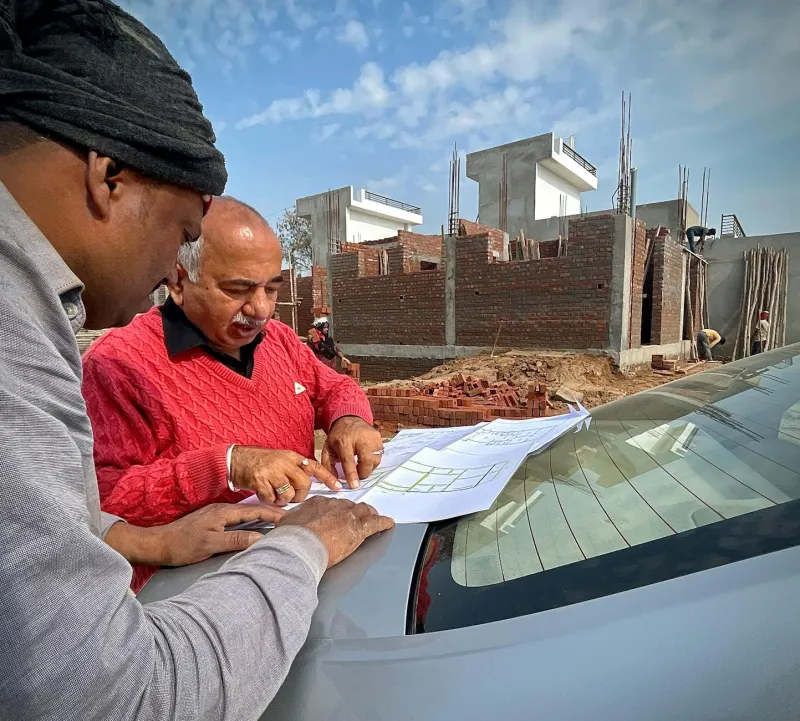
Across Britain, thousands of potential development sites remain dormant not due to planning constraints or infrastructure limitations, but because conventional development models cannot generate sufficient returns to justify investment risk. From former industrial sites requiring extensive remediation to rural plots lacking immediate commercial appeal, these locations represent a hidden crisis in Britain's development pipeline.
Meanwhile, international experiments with alternative ownership and funding structures are delivering remarkable results in similarly challenging contexts. Italian villages selling homes for one euro have attracted global attention, but more sophisticated models combining community ownership, innovative financing, and collaborative development approaches offer genuine lessons for British practitioners.
The Italian Experiment: Beyond the Headlines
Italy's "case a un euro" programmes initially appeared as marketing stunts designed to attract international media attention. However, deeper analysis reveals sophisticated strategies combining heritage preservation, economic regeneration, and community development through creative property ownership models.
Successful programmes require buyers to commit substantial renovation investments within specified timeframes, effectively using nominal sale prices to secure serious development commitments. Local authorities provide technical support, planning guidance, and sometimes direct financial assistance to ensure projects meet community objectives whilst generating economic activity.
The model works because it aligns multiple stakeholder interests: municipalities remove maintenance liabilities whilst preserving architectural heritage, buyers access unique properties at affordable prices, and local economies benefit from construction activity and new residents. This collaborative approach contrasts sharply with Britain's often adversarial relationship between developers, planning authorities, and local communities.
Community Land Trusts: The British Context
Britain has its own nascent experiments with alternative ownership models, particularly through community land trusts (CLTs) that separate land ownership from property development. These structures enable communities to retain permanent control over land use whilst allowing private development of individual properties.
The Granby Four Streets project in Liverpool demonstrates how community ownership can revitalise areas where conventional development has repeatedly failed. By combining community land trust structures with innovative funding from sources including arts organisations and social investors, the project delivered affordable housing whilst preserving neighbourhood character and providing local employment.
Similarly, rural CLTs across Devon, Cornwall, and the Lake District have delivered affordable housing in locations where open market development would create only high-value second homes. These schemes typically involve local communities purchasing land at agricultural values, then developing affordable housing that remains permanently accessible to local residents through restrictive covenants.
 Photo: Lake District, via media-cdn.tripadvisor.com
Self-Build and Custom Build Opportunities
Britain's 2015 Self-Build and Custom Housebuilding Act requires local authorities to maintain registers of self-build demand and provide suitable development opportunities. However, implementation remains patchy, with many councils struggling to identify appropriate sites or structure viable schemes.
Successful self-build initiatives often combine individual ownership with collective infrastructure provision. The Graven Hill development in Oxfordshire provides serviced plots where individuals can design and construct their own homes within agreed parameters, reducing development costs whilst maintaining design quality and neighbourhood coherence.
 Photo: Graven Hill, via img.sparknews.funkemedien.de
For professional developers, facilitating self-build can provide alternative revenue streams through land sales, infrastructure provision, and construction services whilst reducing market risk associated with speculative development. This approach proves particularly effective on sites where conventional development faces planning constraints or market uncertainty.
Partnership Models with Local Authorities
Local authority partnerships offer compelling opportunities to unlock stalled sites through innovative deal structures that share both risk and reward. Rather than disposing of land to the highest bidder, forward-thinking councils are structuring joint ventures that retain public sector involvement whilst accessing private sector expertise and funding.
The London Borough of Lewisham's partnership with Peabody Housing demonstrates how public-private collaboration can deliver mixed-tenure development on challenging sites. By contributing land whilst retaining equity stakes, the council ensures long-term affordable housing provision whilst generating capital receipts for reinvestment in further schemes.
Similar models are emerging across Britain, with councils recognising that traditional land disposal often fails to maximise either financial returns or social outcomes. Partnership structures can provide patient capital, accept lower initial returns, and prioritise community benefits alongside commercial viability.
Innovative Funding Mechanisms
Alternative development models require innovative funding approaches that move beyond conventional development finance. Social impact bonds, community shares, and crowdfunding platforms are enabling projects that combine financial returns with social or environmental benefits.
The Community Interest Company structure provides particular flexibility for projects that generate modest commercial returns whilst delivering substantial community value. These vehicles can access patient capital from impact investors, grant funding from charitable foundations, and community investment through share offerings.
Peer-to-peer lending platforms increasingly support small-scale development projects that fall below traditional lenders' minimum thresholds. These funding sources often accept lower returns in exchange for supporting local economic development or environmental improvement.
Practical Implementation Strategies
Successful alternative development models require careful attention to legal structures, funding arrangements, and stakeholder management. Community consultation must begin early and continue throughout development processes, ensuring local support whilst managing expectations about project outcomes.
Professional developers entering this space need different skills from conventional commercial development. Community engagement, collaborative design processes, and flexible project management become essential capabilities alongside traditional development expertise.
Risk profiles differ significantly from conventional development. While market risk may be reduced through community support and alternative funding sources, projects often face greater complexity in stakeholder management and longer development timescales.
The Role of Professional Developers
For established development companies like HMS Developments, alternative models offer opportunities to access sites and funding sources unavailable through conventional approaches. Community partnerships can provide planning advantages, reduce opposition to development proposals, and create distinctive marketing propositions for end users.
The key lies in recognising that lower profit margins per unit can be offset by reduced land costs, planning risks, and market uncertainty. Alternative models often provide more predictable returns over longer timescales, appealing to investors seeking stable performance rather than maximum short-term profits.
Future Implications
Britain's housing crisis and climate emergency require fundamental changes to development practices. Alternative ownership models offer pathways to deliver affordable housing, preserve community character, and achieve environmental objectives whilst maintaining commercial viability.
As traditional development sites become increasingly scarce and expensive, creative approaches to difficult sites will become essential competitive advantages. Companies that master community engagement, innovative funding, and collaborative development processes will access opportunities unavailable to conventional developers.
The challenge lies not in identifying successful international models, but in adapting these approaches to British legal, financial, and cultural contexts. This requires patient capital, community engagement skills, and willingness to accept different risk-return profiles from conventional development.
For Britain's development industry, the question is not whether alternative models will become mainstream, but how quickly established companies can adapt their practices to benefit from these emerging opportunities whilst delivering the homes and communities Britain desperately needs.