Steel, Stone, and Opportunity: Unlocking the Development Potential of Britain's Forgotten Railway Corridors
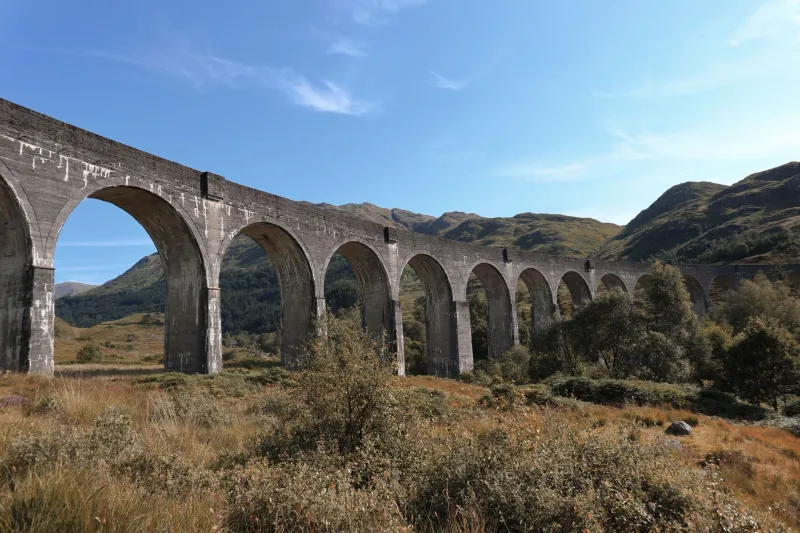
Somewhere between the optimism of the Victorian railway boom and the pragmatism of the Beeching cuts, Britain quietly accumulated one of the most unusual land banks in the developed world. Thousands of miles of closed branch lines, hundreds of redundant stations, and a remarkable collection of stone and iron viaducts now sit in various states of dormancy—owned by a patchwork of public bodies, private operators, and heritage trusts, yet largely overlooked by a development sector fixated on greenfield releases and urban windfall sites.
That oversight is beginning to look like a strategic error.
The Scale of the Opportunity
The Beeching Report of 1963 and its subsequent implementation resulted in the closure of more than 5,000 miles of railway line across Britain. Whilst a proportion of that infrastructure has since been converted into walking and cycling trails—the Sustrans network being the most visible example—significant stretches remain undeveloped, their original formation largely intact beneath decades of vegetation.
Viaducts alone represent a compelling sub-category. Britain constructed over 1,000 major railway viaducts during the Victorian era, and a meaningful number of these structures survive in disused condition. Built to last generations, they are frequently listed at Grade II or above, yet their sheer scale—some spanning hundreds of metres across river valleys or urban districts—presents opportunities that conventional brownfield thinking rarely accommodates.
For developers prepared to engage with complexity, the reward is access to land that is simultaneously scarce, characterful, and increasingly sought after by local authorities seeking regeneration anchors.
Ownership, Legal Structure, and the Pathway to Control
The first challenge any developer faces when approaching redundant railway land is establishing who actually owns it. Historic transfers from British Rail to Railtrack, and subsequently to Network Rail and its subsidiaries, have created a layered ownership picture that frequently requires specialist legal advice to navigate. In some cases, former trackbeds were sold to local authorities, private landowners, or charitable bodies as part of piecemeal disposals that occurred over several decades.
Network Rail Property—now operating under Great British Railways' transitional framework—remains the most significant single holder of surplus railway assets and has demonstrated a growing willingness to engage with development proposals, particularly where schemes can demonstrate public benefit or align with regional transport strategies.
The legal pathway to control typically involves one of three routes: freehold acquisition, long leasehold on agreed terms, or a promoted joint venture where the developer assumes planning and delivery risk in exchange for an agreed land value share. Each route carries different risk profiles, and the appropriate structure will depend heavily on the asset's heritage designation, planning context, and the developer's own balance sheet position.
Easley overlooked but critically important: many former railway corridors carry historic restrictive covenants tied to their original conveyance, limiting permissible uses or requiring reinstatement provisions. Thorough title investigation before heads of terms is not optional—it is foundational.
Heritage as Enabler, Not Obstacle
The instinct among many developers is to treat heritage designation as a constraint. In the context of railway infrastructure, this instinct frequently leads to missed opportunity.
Victorian railway architecture—red brick station buildings, wrought iron footbridges, stone-arched viaducts—carries a cultural resonance that modern construction cannot replicate. When sensitively converted or incorporated into new schemes, these structures become the defining identity of a development rather than a planning burden. Buyers and occupiers pay premiums for authenticity that no amount of feature brickwork or decorative ironwork detailing can manufacture.
The Castlefield area of Manchester offers a useful reference point. The conversion of Victorian railway arches into commercial units catalysed a broader regeneration of an area that had been largely written off. More recently, schemes such as the conversion of the former Mayfield Station site in the same city demonstrate how large-scale redundant railway infrastructure can anchor genuinely mixed-use urban quarters with national investment appeal.
Engaging Historic England early—and treating that engagement as a design consultation rather than a compliance exercise—consistently produces better outcomes. Planners respond more positively to applications that demonstrate a genuine understanding of heritage significance, and local communities are more likely to support schemes that preserve rather than erase the physical memory of their railway history.
Transport-Oriented Development and the Planning Dividend
One of the most compelling arguments for railway corridor development is the intrinsic connectivity that these sites often retain. Even where rail services no longer operate, former trackbeds frequently offer uninterrupted pedestrian and cycling routes into town centres, and some closed lines sit adjacent to stations that remain operational.
Transport-oriented development—the principle of concentrating residential and commercial density around mobility hubs—has moved from academic planning theory into mainstream local plan policy across much of Britain. Developers who can credibly demonstrate that a scheme reduces car dependency and capitalises on existing or planned active travel infrastructure are increasingly well-positioned in planning negotiations.
This represents a meaningful planning dividend for railway corridor projects. The same physical characteristic that makes these sites technically challenging—their linear, narrow formation—also makes them natural active travel routes. A scheme that integrates a converted viaduct with a new cycle path, or that builds residential density at one end of a former branch line whilst preserving the corridor's amenity function along its length, is telling a story that local planning authorities are structurally predisposed to support.
Financial Viability: Managing the Complexity Premium
It would be misleading to suggest that railway corridor development is straightforward. The complexity premium is real, and developers who underestimate it do so at their peril.
Structural assessments of Victorian viaducts frequently reveal condition issues that are not apparent from visual inspection. Masonry repointing, arch ring repair, and drainage remediation can represent substantial capital expenditure before a single square foot of new development is contemplated. Where former trackbeds have been used for fly-tipping or informal storage, ground contamination assessments may add further cost and programme risk.
The financial model for these projects typically requires a longer development period than conventional brownfield schemes, a higher proportion of contingency, and a funding structure that accommodates the unpredictability inherent in heritage-led work. Development finance lenders with experience in complex regeneration—rather than straightforward residential delivery—are essential partners.
Against these costs, developers should model the premium achievable from the heritage character, the marketing advantage of a genuinely distinctive address, and the increasing appetite among institutional investors for assets with embedded ESG credentials. Schemes that can credibly claim to have preserved historic infrastructure, created active travel routes, and delivered housing in sustainable locations are telling a story that resonates with a growing class of patient capital.
A Corridor Worth Exploring
Britain's redundant railway network is not a relic. It is an asset class that has been systematically undervalued by a development sector that has historically favoured the path of least resistance.
For developers willing to invest in the specialist legal, technical, and heritage expertise that these projects demand, the returns—financial, reputational, and social—are considerable. The land exists. The demand exists. The planning policy framework is increasingly sympathetic. What has been missing, in too many cases, is the development ambition to connect them.
At HMS Developments, we believe that Britain's built future need not be built only on greenfield land or conventional brownfield sites. The most interesting opportunities are frequently the ones that require the most careful thought—and the rail corridors that criss-cross our towns and countryside are among the most interesting of all.