Beyond the Nursing Home: How Redundant Care Facilities Are Emerging as Britain's Most Overlooked Conversion Opportunity
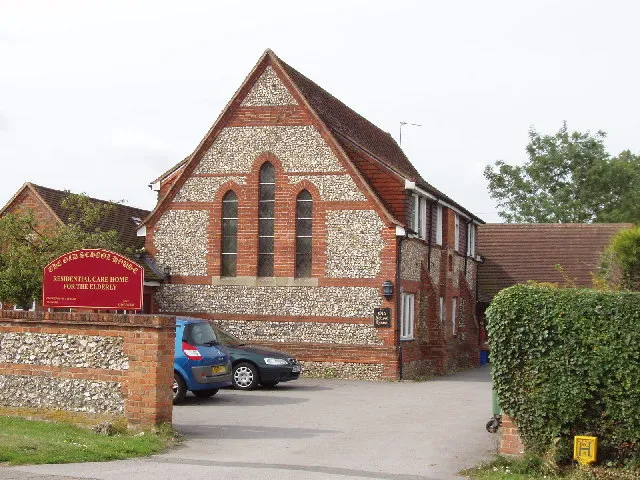
Photo: David Hawgood, CC BY-SA 2.0, via Wikimedia Commons
A quiet but significant surplus of older care home stock is accumulating across the United Kingdom, driven by regulatory change, shifting demographic expectations, and the obsolescence of mid-twentieth-century institutional buildings. For developers with the right expertise, this emerging pipeline represents one of the more compelling mixed-use conversion opportunities of the current cycle.
A Sector in Structural Transition
The UK care sector is undergoing a profound reorganisation. The Care Quality Commission's increasingly rigorous inspection regime has accelerated the closure of facilities that cannot meet modern standards of room size, en-suite provision, communal space, and fire safety compliance. Many of these buildings — constructed in the 1960s, 1970s, and 1980s — were designed around an institutional model of care that contemporary regulation and, more importantly, contemporary residents simply will not accept.
At the same time, the demographic profile of care need is shifting. Older people are living longer in their own homes, supported by improved community care packages and assistive technology. When residential care does become necessary, the expectation is for a built environment that resembles a high-quality apartment rather than a hospital ward. The gap between what much of Britain's existing care estate can offer and what the market now demands is widening every year.
The consequence is a growing volume of care home closures — estimated by some sector analysts to be running at several hundred facilities annually — releasing buildings that are frequently well-located, structurally sound, and possessed of planning histories that can be leveraged by an informed developer.
The Scale of the Opportunity
Quantifying the precise value of this pipeline is difficult, given the fragmented nature of care home ownership. The sector comprises large corporate operators, charitable trusts, local authority provision, and a long tail of independent family-run homes. Each ownership structure presents different disposal dynamics and different negotiating conditions.
Nevertheless, industry estimates suggest that the aggregate value of care home assets either already closed or at risk of closure within the next five years runs into the tens of billions of pounds at gross development value. Even a modest share of that pipeline, captured by developers with the technical and planning competence to unlock it, represents a substantial opportunity.
The attractions are evident. Former care homes typically occupy generous plots — often with mature garden grounds — in established residential areas where new-build land is scarce. Their planning history as a community use facility can, in some cases, simplify the path to residential or mixed-use consent. And their acquisition cost, reflecting the distress of closure and the perceived complexity of conversion, frequently underestimates the underlying site value.
Planning Pathways and Their Complexities
The planning dimension of care home conversion is nuanced and demands careful navigation. Former care facilities are commonly designated as community use within local development plans, meaning that a straightforward residential conversion application may face resistance from authorities reluctant to see the loss of a social care asset — even one that is no longer functionally viable.
Developers who have successfully navigated this challenge have typically employed one of two strategies. The first is to demonstrate, through a robust sequential test and market assessment, that the care use is genuinely redundant and that no viable operator can be found for the facility. This evidence-based approach, supported by specialist healthcare property consultants, has secured residential consent on numerous closed sites across the North West, the Midlands, and the South East.
The second strategy is to embrace the community use designation rather than resist it, proposing a mixed-use scheme that incorporates an element of specialist housing — extra-care apartments, retirement living, or supported housing — alongside conventional residential. This approach aligns the development with local authority housing strategies, frequently unlocks grant funding from Homes England or Integrated Care Boards, and positions the developer as a partner in solving a genuine social challenge rather than simply extracting a planning gain.
Technical Considerations: What the Buildings Demand
Conversion of former care homes is not without its technical challenges. Many buildings of this vintage present structural configurations — wide corridors, communal bathrooms, shared dining rooms — that do not map neatly onto conventional residential floor plates. Ceiling heights may be adequate but room dimensions, particularly in older wing extensions, can be constraining.
Fire strategy is invariably complex. Buildings that have been operated under care home fire safety regulations, with their emphasis on stay-put strategies and compartmentation, must be fundamentally reassessed when the occupancy category changes to standard residential or mixed use. M&E systems — typically designed for institutional operation — will in most cases require complete replacement.
The developers who are making the most consistent returns from this asset class are those who have invested in building an internal technical capability — or a reliable external consultant team — capable of producing accurate pre-acquisition cost assessments. The margin on a care home conversion can be eroded quickly by underestimated strip-out costs, asbestos remediation, or the expense of achieving modern energy performance standards in a building envelope that was never designed with thermal efficiency in mind.
Financing the Conversion
Development finance for care home conversions has become more accessible as lenders have developed familiarity with the asset class. Specialist development lenders, including several active in the UK market, will consider loan-to-cost ratios comparable to those available for conventional residential schemes, provided that the planning position is sufficiently advanced and the exit strategy — whether sale, rental, or operational income from a specialist housing use — is clearly evidenced.
Grant funding adds a further dimension. Where a scheme incorporates affordable housing, extra-care provision, or supported living, Homes England capital funding streams may be available to bridge viability gaps. Several local authorities have also used their own housing revenue accounts to co-invest in former care home sites as a mechanism for delivering specialist older persons' housing that their own development programmes cannot supply.
A Moment of Structural Opportunity
The convergence of regulatory pressure on care operators, evolving demographic expectations, and a chronic shortage of specialist housing supply has created conditions that are, for the informed developer, genuinely favourable. The sites are accumulating. The planning frameworks, whilst complex, are navigable. The financing is available. And competition, for the moment, remains limited to those who have taken the trouble to understand the sector.
At HMS Developments, we regard the emerging care home conversion pipeline as a serious and durable component of Britain's broader residential development landscape. The buildings that once served one generation's needs are, in the right hands, well placed to serve the next.