Industrial Evolution: Britain's Forgotten Business Parks Hold the Key to Tomorrow's Housing Crisis
The Hidden Landscape of Opportunity
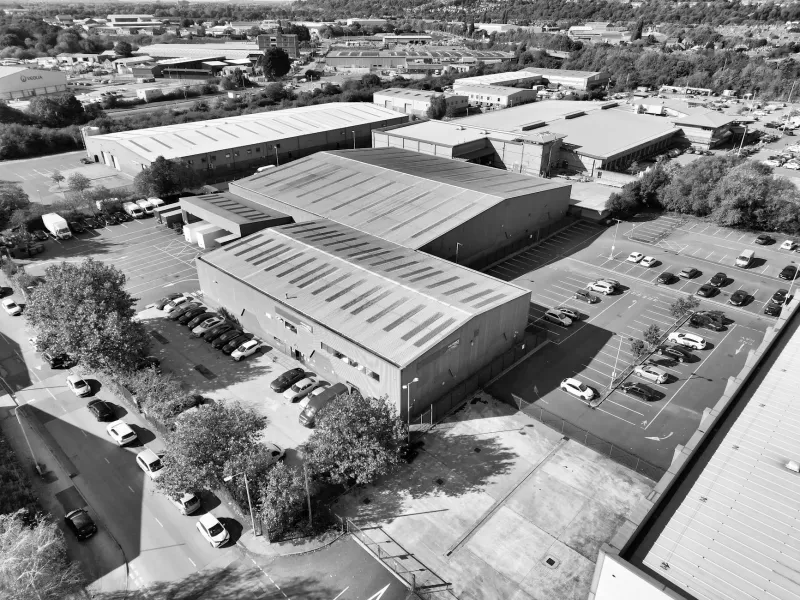
Driving through Britain's urban periphery, one encounters a familiar sight: sprawling industrial estates filled with low-rise warehouses, light manufacturing units, and business parks that peaked in the 1980s. These areas, often dismissed as unremarkable, represent perhaps the most significant untapped development opportunity in contemporary Britain.
Unlike the prestigious brownfield sites that capture headlines—former gasworks, railway yards, or derelict mills—industrial estates lack romantic heritage appeal. Yet they possess something far more valuable: substantial acreage in established urban locations, existing infrastructure, and crucially, land values that have yet to reflect their true potential.
The Economics of Transformation
The mathematics of industrial estate redevelopment tell a compelling story. Consider a typical 10-hectare estate on the edge of a regional city centre, currently generating rental yields of perhaps £50-80 per square metre annually. The same land, rezoned for mixed-use development, could accommodate 800-1,200 residential units alongside commercial space, representing a value uplift of 300-500%.
This transformation isn't merely theoretical. In Birmingham's Jewellery Quarter periphery, what were once small-scale manufacturing premises now command residential values exceeding £4,000 per square metre. Similar patterns emerge across Manchester's industrial belt, Leeds' former textile districts, and the light industrial zones surrounding Bristol.
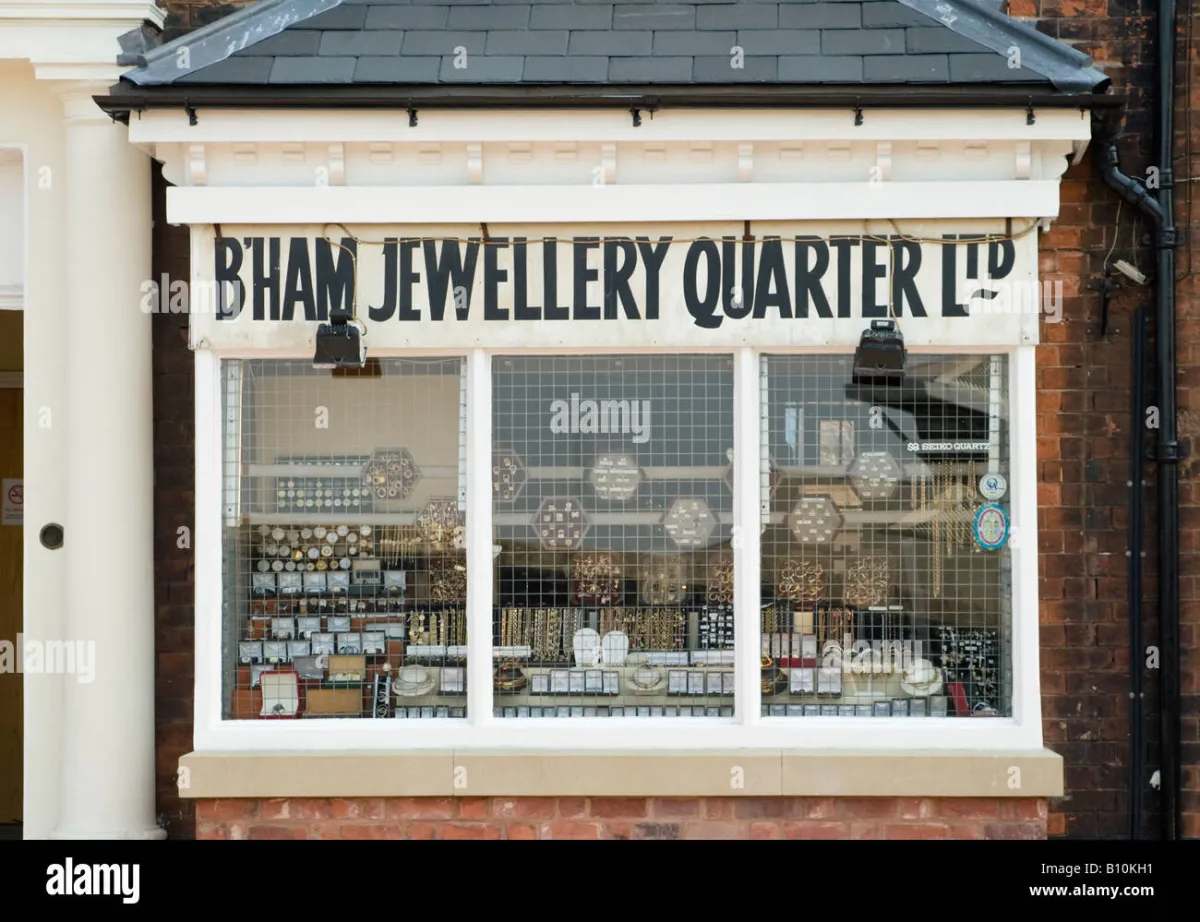 Photo: Birmingham's Jewellery Quarter, via c8.alamy.com
The acquisition strategy differs markedly from traditional brownfield development. Industrial estates typically comprise multiple small ownerships—individual unit owners, small businesses, and modest property investment companies. This fragmentation, whilst initially appearing as a barrier, actually creates opportunity for patient capital. Unlike competing against institutional buyers for marquee sites, developers can often acquire industrial units incrementally, building critical mass over time.
Navigating the Planning Paradigm
The regulatory landscape presents both challenge and opportunity. Local planning authorities increasingly recognise that protecting every square metre of industrial land is neither economically sensible nor practically sustainable. The key lies in demonstrating that proposed mixed-use schemes can accommodate equivalent employment density whilst delivering much-needed housing.
Successful applications typically follow a consistent pattern: retention of ground-floor commercial space, incorporation of modern workspace suitable for contemporary businesses, and crucially, evidence that existing businesses can be accommodated within the wider area. This approach acknowledges planning authorities' legitimate concerns about employment land loss whilst presenting a compelling case for intensification.
The emerging concept of 'industrial intensification' has gained significant traction. Rather than wholesale clearance, forward-thinking schemes incorporate modern industrial space within mixed-use developments. Multi-storey logistics facilities, maker spaces, and flexible workspace can deliver higher employment density than traditional single-storey units whilst supporting residential development above.
Regional Hotspots and Strategic Positioning
Certain regions demonstrate particularly strong potential for industrial estate transformation. The Thames Estuary corridor, stretching from East London through Kent, contains vast industrial areas ripe for mixed-use development. Proximity to London, improving transport links, and local authority support for regeneration create ideal conditions.
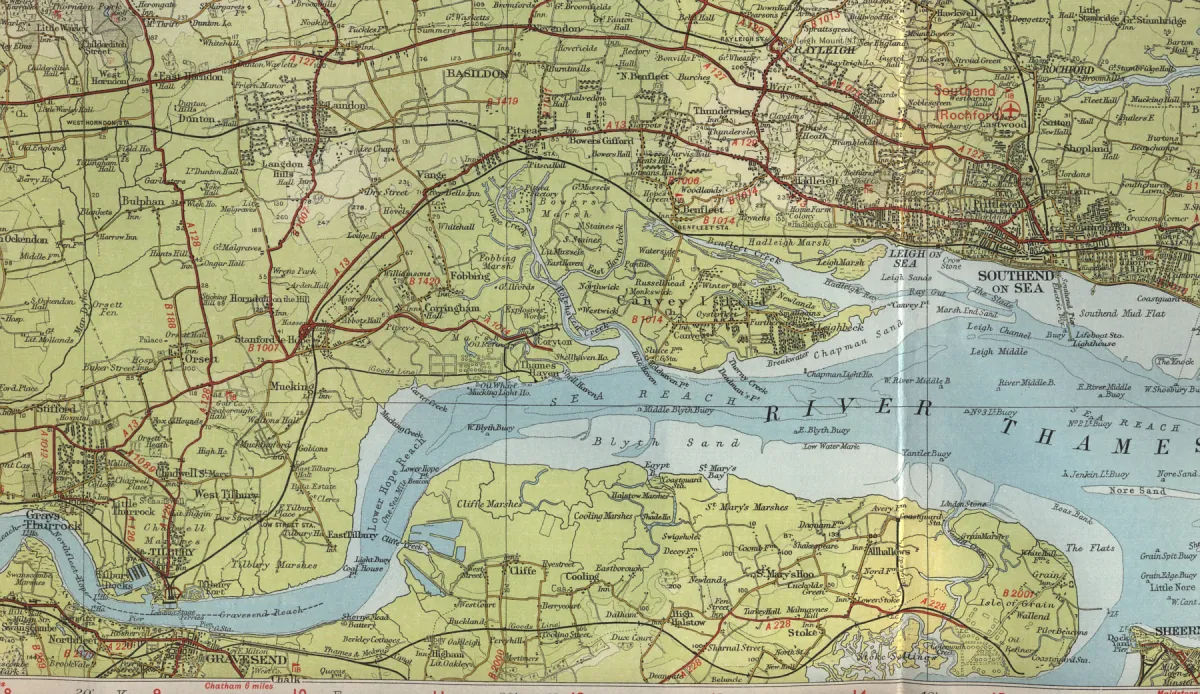 Photo: Thames Estuary, via www.british-coast-maps.com
Similarly, the Manchester-Liverpool corridor presents exceptional opportunities. Former industrial heartlands benefit from excellent connectivity, established urban infrastructure, and supportive local authorities keen to attract investment. The key lies in identifying estates with strong transport links—particularly rail connectivity—and proximity to existing residential areas.
Scotland's Central Belt offers perhaps the most compelling combination of available land, supportive planning policy, and unmet housing demand. Industrial estates around Glasgow and Edinburgh increasingly attract developer attention, particularly those benefiting from recent infrastructure investment.
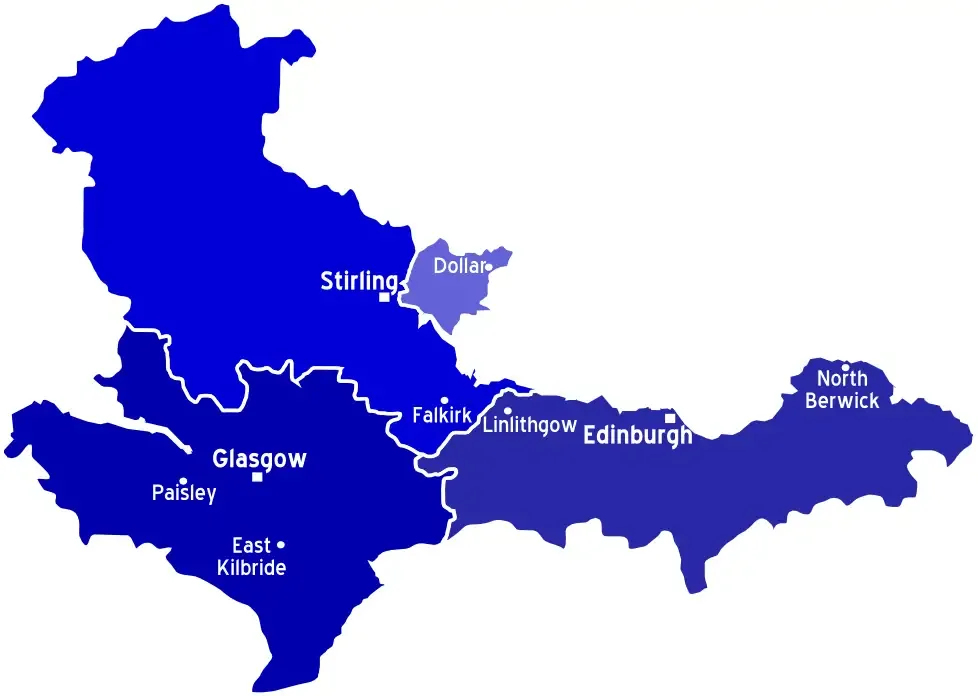 Photo: Scotland's Central Belt, via www.mapsof.net
The Institutional Awakening
Pension funds and institutional investors are beginning to recognise industrial estate regeneration as a distinct asset class. Unlike traditional development, which often requires substantial upfront investment before any return, industrial estates generate immediate income whilst planning applications progress. This income stream, combined with significant capital appreciation potential, creates an attractive risk-adjusted return profile.
The patient capital nature of institutional investment aligns perfectly with the extended timescales typical of industrial estate assembly and redevelopment. Whilst individual developers might struggle with the complexity of multiple acquisitions and extended planning processes, institutions can absorb these challenges within diversified portfolios.
Challenges and Considerations
Industrial estate development isn't without complexity. Contamination issues, whilst generally less severe than heavy industrial sites, require careful assessment. Many estates contain businesses with ongoing leases, necessitating careful tenant management and potentially extended development timescales.
The social dimension demands particular attention. Industrial estates often provide affordable workspace for small businesses and employment for local communities. Successful regeneration schemes must balance development aspirations with community needs, ensuring that transformation enhances rather than displaces existing economic activity.
The Future Landscape
Britain's industrial estates represent more than development opportunity—they embody the potential for genuine urban regeneration. Unlike greenfield development, which extends urban sprawl, or brownfield schemes that often displace existing communities, industrial estate transformation can intensify land use whilst preserving economic function.
As Britain grapples with housing shortage, climate commitments, and economic productivity challenges, these overlooked assets offer solutions. The developers who recognise this potential today will shape tomorrow's urban landscape, transforming Britain's forgotten industrial heritage into thriving mixed-use communities that serve both economic and residential needs.