Walking Distance: Can Britain Finally Embrace the European Model of Neighbourhood Design?
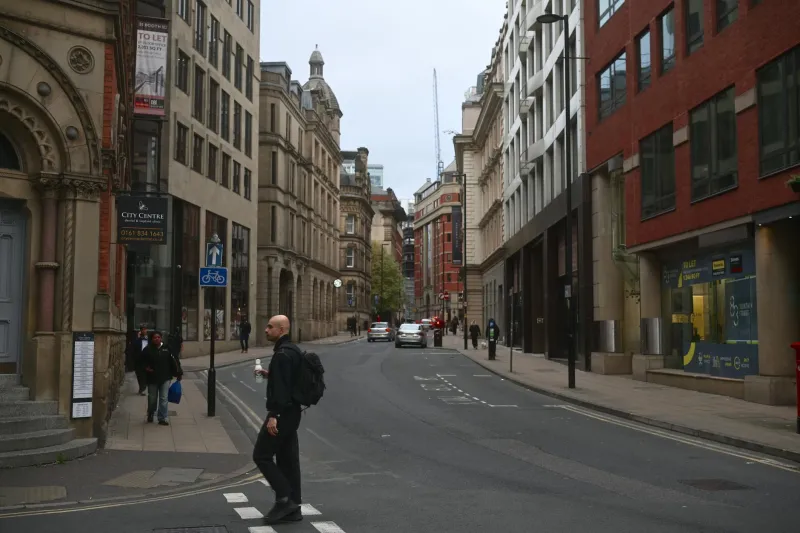
Continental Inspiration, British Aspiration
Walk through any established district in Paris, Barcelona, or Vienna, and the difference becomes immediately apparent. Children walk independently to school, residents collect groceries on foot, and neighbourhood cafés buzz with local conversation. These aren't tourist attractions—they're ordinary neighbourhoods designed around human scale rather than automotive convenience.
Britain, by contrast, has spent decades perfecting the art of car-dependent development. Housing estates connected by distributor roads, retail parks accessible only by vehicle, and employment centres requiring lengthy commutes define much of post-war British urbanism. Yet mounting evidence suggests this model is becoming economically and socially unsustainable.
The 15-minute neighbourhood concept—where residents can access daily needs within a quarter-hour walk or cycle—represents more than urban planning theory. It embodies a fundamental rethinking of how communities function, with profound implications for property values, infrastructure costs, and quality of life.
The European Blueprint
Paris mayor Anne Hidalgo's commitment to 15-minute neighbourhoods has captured international attention, but the concept builds on decades of continental urban planning tradition. Barcelona's 'superblocks' restrict traffic whilst creating pedestrian-priority spaces. Vienna's social housing estates integrate schools, healthcare, and retail within walking distance of homes.
These examples share common characteristics: mixed-use zoning that permits residential, commercial, and office functions within the same areas; high-quality public transport connecting neighbourhoods to city centres; local centres designed around pedestrian comfort rather than vehicle circulation; and crucially, sufficient residential density to support local businesses and services.
The economic model underlying European neighbourhood design differs markedly from British practice. Rather than separating land uses to maximise individual plot values, European planning seeks to optimise area-wide economic performance. Local shops thrive because they serve walkable catchments. Public transport proves viable because stations serve dense residential populations. Infrastructure costs per resident decrease because services are shared efficiently.
British Barriers and Emerging Opportunities
Several factors have historically prevented 15-minute neighbourhood adoption in Britain. Post-war planning legislation separated residential and commercial uses, making mixed-use development complex and expensive. Car ownership growth encouraged low-density suburban expansion. Retail consolidation favoured large-format stores requiring extensive parking.
Perhaps most significantly, British development finance has evolved around single-use projects. Residential developers focus exclusively on housing, whilst retail developers concentrate on shopping centres. Mixed-use schemes require different expertise, longer development periods, and more complex funding structures—barriers that have deterred mainstream adoption.
However, these obstacles are gradually diminishing. Permitted development rights now allow easier conversion between residential and commercial uses. The National Planning Policy Framework explicitly supports mixed-use development. Most importantly, changing consumer behaviour is creating market demand for walkable neighbourhoods.
The Economics of Proximity
Rising fuel costs are fundamentally altering household location decisions. Families spending £200-300 monthly on commuting and car-dependent shopping are increasingly attracted to walkable alternatives. Property values in neighbourhoods with good Walk Scores—measuring pedestrian access to amenities—consistently outperform car-dependent areas.
The commercial property sector is recognising this shift. Rather than pursuing ever-larger retail parks, sophisticated operators are investing in neighbourhood centres serving dense residential populations. These smaller formats often achieve higher sales per square metre than destination retail, whilst requiring lower capital investment.
Office occupiers are similarly reassessing location strategies. The hybrid working model reduces requirements for city centre space whilst increasing demand for local workspace. Neighbourhood offices serving residents within walking distance can command premium rents whilst offering superior work-life balance.
Emerging British Examples
Several recent British developments demonstrate 15-minute neighbourhood principles, albeit often without explicit recognition of the concept. King's Cross in London integrates residential, office, retail, and cultural uses within a walkable area served by excellent public transport. Residents can access employment, entertainment, and daily shopping without leaving the neighbourhood.
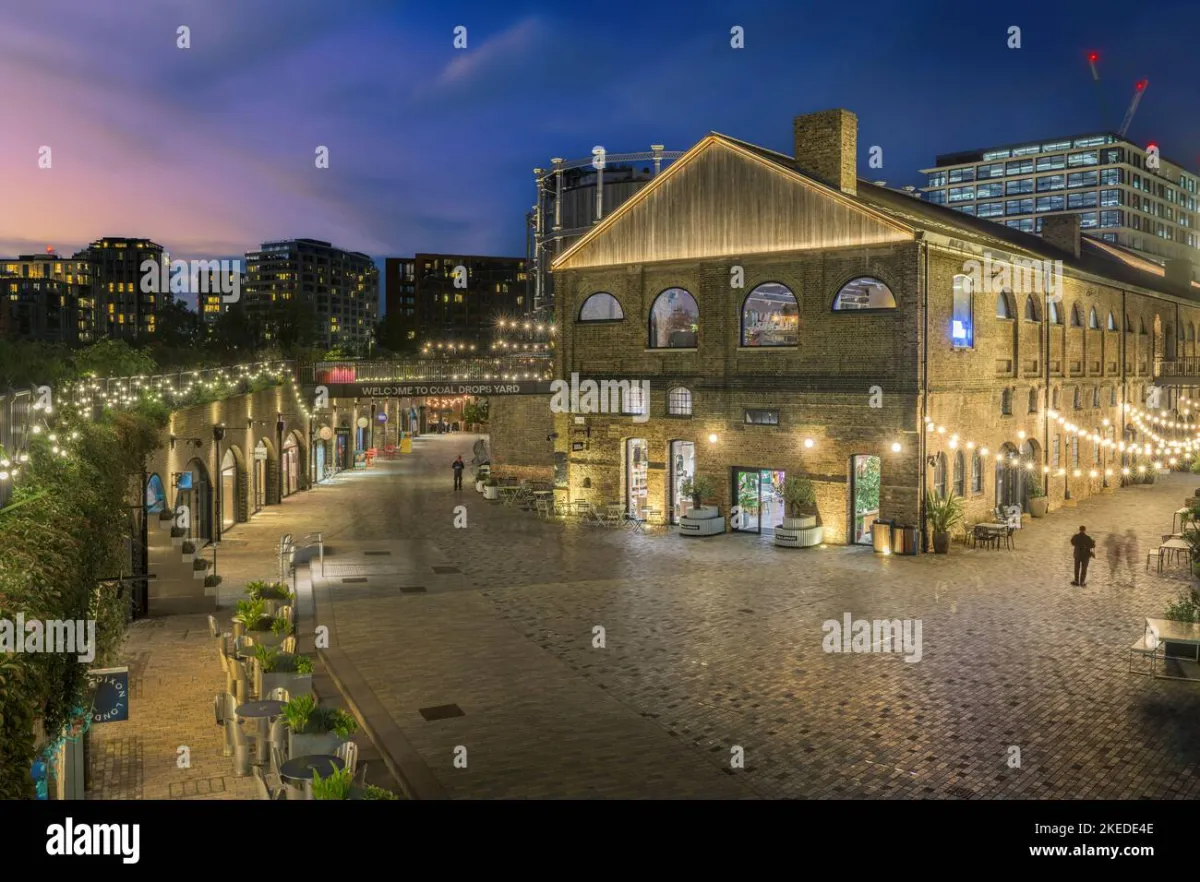 Photo: King's Cross, via c8.alamy.com
In Birmingham, the Jewellery Quarter has evolved into a genuine mixed-use neighbourhood. Historic buildings accommodate apartments above ground-floor businesses. Independent restaurants, cafés, and shops serve local residents alongside workers. The area demonstrates how organic development can achieve 15-minute neighbourhood characteristics without master planning.
Glasgow's Merchant City offers another model. Former industrial buildings now contain apartments, offices, galleries, and restaurants. The area's compact scale and pedestrian-friendly streets create genuine neighbourhood character. Property values reflect this appeal, with residential prices substantially exceeding suburban alternatives.
The Planning Policy Context
Recent policy developments suggest growing official support for 15-minute neighbourhood principles. The government's 'Beautiful Neighbourhoods' agenda explicitly promotes walkable communities. Local authorities are increasingly requiring new developments to demonstrate pedestrian and cycle connectivity.
The emerging Infrastructure Levy system may further support neighbourhood-scale development. Rather than securing individual planning obligations, authorities will collect standardised charges to fund area-wide infrastructure. This approach favours comprehensive neighbourhood development over piecemeal projects.
Climate change commitments are also driving policy support. Reducing transport emissions requires fundamental changes to urban form, making car-dependent development increasingly difficult to justify. The 15-minute neighbourhood offers a practical framework for delivering low-carbon communities.
Commercial Viability and Investment Returns
The financial case for 15-minute neighbourhoods is strengthening. Mixed-use developments often achieve superior investment returns compared to single-use alternatives. Residential values benefit from walkable amenities. Commercial spaces command premiums for serving captive local populations. The diversified income stream provides resilience during economic downturns.
Development costs can initially appear higher due to design complexity and longer planning processes. However, these upfront investments often generate superior long-term returns. Neighbourhoods with strong local amenities demonstrate price resilience and rental growth that justify additional development costs.
The build-to-rent sector is particularly well-suited to 15-minute neighbourhood development. Operators can retain ownership of commercial spaces, ensuring appropriate tenant mix and neighbourhood management. This integrated approach creates competitive advantage whilst supporting premium rental positioning.
Challenges and Adaptations
Implementing 15-minute neighbourhoods in Britain requires adapting continental models to local conditions. British high streets differ from European equivalents, requiring innovative approaches to retail provision. Planning systems designed around use separation need updating to support mixed-use development.
Cultural adaptation proves equally important. British consumers are accustomed to choice and convenience associated with car-based shopping. Successful neighbourhood retail must offer sufficient variety and quality to compete with destination alternatives.
The scale challenge is significant. European cities benefit from existing neighbourhood centres that evolved over centuries. Britain often lacks this foundation, requiring new neighbourhood centres to be created from scratch—a more complex and expensive proposition.
The Path Forward
Despite challenges, momentum for 15-minute neighbourhoods in Britain is building. Rising transport costs, changing work patterns, and climate concerns are creating market demand for walkable communities. Policy support is strengthening. Most importantly, early examples are demonstrating commercial viability.
Success requires collaboration between developers, local authorities, and communities. Rather than imposing continental models wholesale, British 15-minute neighbourhoods must reflect local culture whilst delivering international best practice. This adaptation process offers opportunities for innovation that could ultimately influence European practice.
The developers who master this transition will shape Britain's urban future. As car dependency becomes economically unsustainable and environmentally unacceptable, the 15-minute neighbourhood represents not just planning ideal, but commercial necessity. The question isn't whether Britain will embrace this model, but which developers will lead the transformation.