Engineering Resilience: How Innovative Construction Unlocks Britain's Flood-Risk Development Sites
Redefining 'Undevelopable': Britain's Flood Plain Opportunity
Across Britain, thousands of hectares of land lie dormant, dismissed as unsuitable for development due to flood risk designations. Yet innovative engineering approaches and evolving insurance frameworks are beginning to challenge this conventional wisdom, presenting opportunities for developers willing to embrace climate-adaptive construction techniques.
The Environment Agency estimates that approximately 5.2 million properties across England face some degree of flood risk, yet this statistic often obscures the nuanced reality of flood management. Modern engineering solutions can mitigate many flood risks whilst creating developments that contribute positively to local water management systems.
Elevated Solutions: Raising Developments Above Risk
The most visible innovation in flood-resilient development involves elevated construction techniques that position habitable spaces above anticipated flood levels. These approaches range from traditional raised foundations to sophisticated stilted designs that integrate seamlessly with surrounding landscapes.
In Somerset, following the devastating 2014 floods, several housing developments have incorporated raised construction that elevates ground floors 1.5-2 metres above surrounding land levels. Rather than creating fortress-like structures, architects have designed these elevations as integral design features, incorporating under-building parking, storage, and communal spaces.
Advanced modular construction techniques facilitate elevated development whilst controlling costs. Off-site manufacturing allows precise engineering of flood-resistant components, whilst standardised elevation systems reduce construction complexity and timeline risks.
Sustainable Drainage: From Problem to Solution
Contemporary flood-resilient developments increasingly incorporate Sustainable Drainage Systems (SuDS) that transform surface water management from liability into asset. These systems capture, store, and slowly release rainwater, reducing flood risk whilst creating attractive landscape features.
Permeable paving, retention ponds, and bioswales integrate into development designs as amenity features rather than engineering necessities. Residents often prefer developments with integrated water features, viewing them as premium environmental amenities rather than flood management infrastructure.
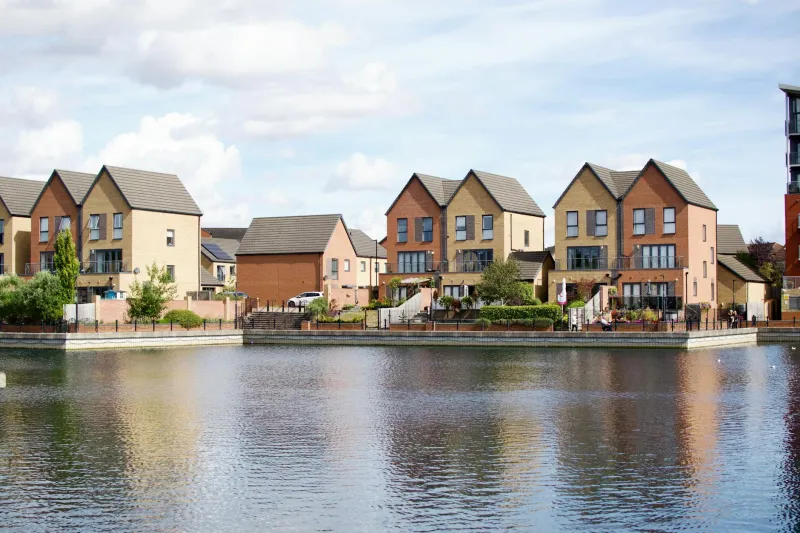
The Trumpington Meadows development in Cambridge exemplifies this approach, incorporating extensive SuDS that manage surface water whilst creating recreational spaces and wildlife habitats. The development's water management features have become selling points rather than planning obligations.
 Photo: Trumpington Meadows, via bilder.spielplatztreff.de
Insurance Evolution: Risk Assessment in Transition
The insurance sector's approach to flood-risk properties is evolving as engineering solutions demonstrate their effectiveness. Flood Re, the government-backed reinsurance scheme, provides transitional support whilst the industry develops more sophisticated risk assessment models that recognise climate-resilient construction techniques.
Insurers increasingly differentiate between developments that simply exist in flood-risk areas and those engineered specifically to withstand flooding. Properties incorporating proven flood-resistance measures often secure standard insurance coverage, removing a significant barrier to both development finance and end-user mortgages.
This evolution creates opportunities for developers who can demonstrate genuine flood resilience through engineering solutions and comprehensive risk management strategies.
Engineering Innovation: British Solutions for British Challenges
British engineering firms are developing flood-resilience technologies specifically adapted to UK conditions and planning frameworks. These innovations range from deployable flood barriers that activate automatically during high water events to integrated building systems that allow controlled flooding of non-habitable spaces whilst protecting residential areas.
AmphiBious foundations, pioneered in the Netherlands but adapted for British conditions, allow buildings to float during extreme flood events whilst remaining anchored to prevent displacement. Several pilot projects across Yorkshire and Lancashire are testing these approaches in real-world conditions.
Building-integrated flood storage represents another innovative approach, where basement areas or ground-floor commercial spaces are designed to accommodate temporary flooding whilst protecting upper-level residential accommodation.
Planning Policy Adaptation: Regulatory Support for Innovation
Local planning authorities are gradually adapting policies to accommodate flood-resilient development techniques. The National Planning Policy Framework increasingly recognises that well-engineered flood-resilient development can contribute positively to local flood management whilst addressing housing supply challenges.
Several local authorities have developed supplementary planning guidance specifically addressing flood-resilient development standards. These frameworks provide clarity for developers whilst ensuring that flood-resilient claims are substantiated through proper engineering analysis.
The key lies in demonstrating that proposed developments will not increase flood risk for existing properties whilst providing genuine resilience for new residents.
Economic Viability: Making the Numbers Work
Flood-resilient construction techniques typically add 5-15% to development costs, but this investment often proves economically viable when considered against land cost savings and premium pricing opportunities. Land in flood-risk areas often trades at significant discounts to equivalent sites without flood designations, creating opportunities for developers who can engineer appropriate solutions.
Moreover, climate-resilient developments increasingly command premium pricing as buyers recognise long-term value in properties designed to withstand changing environmental conditions. This premium often exceeds the additional construction costs, particularly in areas where climate resilience represents a genuine competitive advantage.
Regional Opportunities: Targeting Strategic Locations
Certain regions offer particularly compelling opportunities for flood-resilient development. The Thames Estuary, Lancashire's river valleys, and Yorkshire's flood plains all contain substantial land areas that could support development with appropriate engineering solutions.
 Photo: Thames Estuary, via muntii-fagaras.ro
These locations often benefit from excellent transport links, established infrastructure, and proximity to employment centres – attributes that would make them highly desirable development sites absent flood risk considerations.
Future Landscape: Climate Adaptation as Standard Practice
As climate change intensifies weather patterns and flood risks evolve, climate-adaptive construction techniques will likely transition from specialist applications to standard development practice. Developers who master these approaches today position themselves advantageously for a future where climate resilience becomes a fundamental requirement rather than an optional enhancement.
The question is not whether Britain will need more flood-resilient development, but whether the development industry will lead this transition or react to regulatory requirements. Early adopters who demonstrate successful flood-resilient developments will establish competitive advantages in an increasingly climate-conscious market.
Flood-risk land represents one of Britain's largest untapped development resources. With appropriate engineering solutions and evolving regulatory support, these sites could contribute meaningfully to addressing the nation's housing supply challenges whilst demonstrating that development can work with natural systems rather than against them.