Acres of Opportunity: Why Britain's Struggling Retail Parks Could Become the Next Frontier of Urban Regeneration
Photo: Dietmar Rabich, CC BY-SA 4.0, via Wikimedia Commons
The Overlooked Estate at the Edge of Town
Drive to the periphery of almost any British town of moderate size and the landscape tells a consistent story: a retail park, built sometime between the 1980s and the early 2000s, anchored by a supermarket that may still be trading, surrounded by units that are not. The signage of former occupants — a department store, a DIY chain, a casual dining operator — has been removed, leaving blank fascias and empty car parks that stretch across several acres of land that was, not long ago, considered a prime commercial proposition.
These sites are not a niche phenomenon. According to data from the Local Data Company and the British Retail Consortium, vacancy rates across out-of-town retail parks have risen materially since 2019, accelerated by the structural decline of the retail categories — electricals, homewares, fashion multiples — that provided their anchor tenants for a generation. The retail park model that seemed so commercially robust in the age of the car-dependent weekly shop has been profoundly disrupted by e-commerce, changing leisure patterns, and the withdrawal of the operators who once defined the format.
What remains is a substantial and largely underappreciated development opportunity — one that has received considerably less attention than the high street conversion narrative, despite offering some structural advantages that town centre sites cannot match.
Infrastructure Already in Place
The most compelling argument for out-of-town retail parks as development sites is the infrastructure that already exists on them. Unlike a brownfield site in a former industrial area, or a gap site in a constrained urban context, a redundant retail park typically arrives with a set of physical assets that would cost millions to replicate from scratch.
Serviced car parks — however oversized for future purposes — represent ground that has already been prepared, compacted, and drained. Utility connections for electricity, water, gas, and drainage are already in place, often sized for the significant commercial demands of large-format retail. Road access, typically designed to accommodate high volumes of traffic, is generally well-established. In many cases, the structural frames of existing buildings can be retained and adapted rather than demolished entirely, reducing both cost and embodied carbon.
For a developer assessing the cost base of a conversion or mixed-use redevelopment scheme, these existing assets translate directly into reduced infrastructure expenditure and faster delivery timelines compared with a greenfield or heavily contaminated brownfield alternative. In a development economics environment where viability is under constant pressure, this head start matters.
The Planning Reclassification Challenge
The principal obstacle to unlocking retail park sites for residential or mixed-use development is not physical but political and procedural. The planning use class framework, despite reforms introduced in 2020 that created the broader Class E commercial category, does not provide an automatic route from out-of-town retail to residential use. A change of use application is required, and in many instances, a full planning application for a new scheme.
Local planning authorities approach these applications with varying degrees of enthusiasm. In areas where the retail park in question represents one of the few remaining commercial anchors in a given settlement, planners may resist full residential conversion on the grounds that it permanently removes employment land from the supply. Sequential test requirements — which demand that developers demonstrate that town centre or edge-of-centre sites have been considered before out-of-town development is approved — can add complexity, even where the proposed use is predominantly residential.
Nevertheless, the policy environment is shifting. The National Planning Policy Framework's emphasis on making effective use of land, combined with growing recognition at ministerial level that housing delivery requires creative approaches to the existing built stock, has created greater openness to retail-to-residential and retail-to-mixed-use proposals in recent years. Developers who can demonstrate a high-quality, well-designed scheme with genuine community benefit — rather than simply a conversion of minimum viable standard — are finding more receptive audiences at planning committees.
Case Study Indicators: Where Repurposing Is Taking Hold
While large-scale retail park regeneration remains relatively rare, a number of indicative examples illustrate the direction of travel.
In the East Midlands, former big-box retail sites have been the subject of masterplanning exercises that propose mixed-use communities incorporating housing, healthcare facilities, and community space — retaining only the most viable retail elements while fundamentally restructuring the land use pattern. In the North West, local authorities facing acute housing pressures have actively engaged with landowners of underperforming retail parks to explore residential-led redevelopment, recognising that the alternative — prolonged vacancy and physical deterioration — serves no one's interests.
 Photo: North West, via s.yimg.com
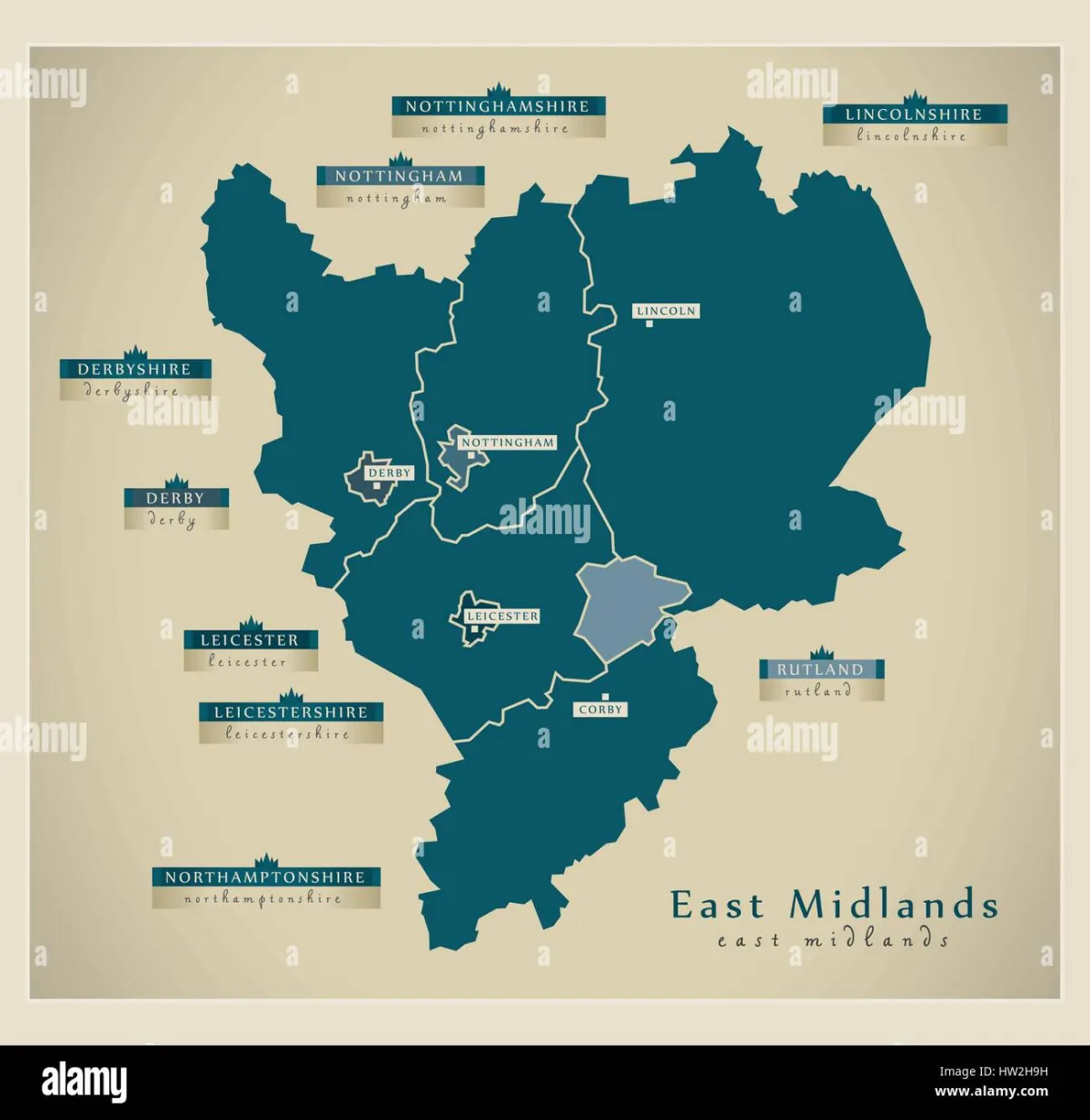 Photo: East Midlands, via c8.alamy.com
The most commercially viable examples tend to share certain characteristics: locations within walking or cycling distance of town centres, existing public transport links that can be enhanced rather than created from nothing, and land values that, while not negligible, remain sufficiently below those of comparable urban sites to support viable development appraisals. Where these conditions align, the case for repurposing becomes compelling.
Barriers That Cannot Be Wished Away
Honesty requires acknowledgement of the significant obstacles that remain. Land ownership on retail parks is frequently fragmented — a combination of institutional freeholders, individual unit leaseholders, and in some cases occupying retailers with long-term leases that have not yet expired. Assembling a coherent development site from such a complex ownership structure demands time, legal expertise, and the patience to negotiate with parties whose interests may not align.
Contamination is a further variable. While retail parks lack the heavy industrial legacy of many brownfield sites, decades of car park use, fuel storage, and commercial activity mean that ground condition surveys frequently reveal issues requiring remediation. The cost of addressing these can erode the infrastructure advantage these sites otherwise offer.
Viability in lower-demand locations also warrants careful scrutiny. In areas where residential values are modest and demand is limited, the arithmetic of conversion may not work without public sector support — grant funding, infrastructure contributions, or local authority land assembly — that is not always available. Developers who approach these sites with optimism unsupported by rigorous appraisal risk discovering that the opportunity is less straightforward than it first appeared.
A Frontier Worth Pursuing
None of these challenges is insurmountable, and none diminishes the fundamental point: Britain has a large and growing stock of underperforming out-of-town retail land that represents a genuine resource for addressing the nation's housing and regeneration needs. The infrastructure advantages are real, the land bank is significant, and the policy environment is gradually becoming more accommodating.
For developers willing to engage with the complexity of ownership assembly, planning negotiation, and mixed-use design, retail park regeneration offers a distinctive opportunity — one that sits at the intersection of commercial ambition and genuine civic contribution. At HMS Developments, we regard these edge-of-town sites not as the problem they are often characterised as, but as one of the more promising frontiers in Britain's broader regeneration story.