When Water Becomes the Wall: How Climate-Constrained Regions Are Rewarding Britain's Most Forward-Thinking Developers
For much of the postwar era, British developers operated under a reasonable assumption: the infrastructure would be there. Water would arrive via mains connection. Sewage would depart through the combined sewer network. Flood risk was a matter for the Environment Agency's flood maps, and if a site fell outside the relevant zones, the question was largely settled.
That assumption is no longer reliable.
Across significant portions of southern and eastern England—and in isolated pockets throughout the rest of the country—water infrastructure has reached a condition that is quietly but systematically constraining development in ways that the planning system is only beginning to formalise. Thames Water, Southern Water, and Anglian Water have each, at various points in recent years, indicated that their networks cannot accommodate additional demand without material investment in capacity. The consequences for development are direct and increasingly significant.
The Infrastructure Constraint Landscape
Britain's water infrastructure crisis has three distinct dimensions, each of which creates a different type of development challenge.
The first is sewage capacity. The Water Industry Act 1991 imposes a statutory duty on water companies to provide sewerage connections, but this obligation is increasingly tested by networks that were designed for a different era's population density and rainfall pattern. Nutrient neutrality requirements—introduced following European Court of Justice rulings on protected habitat sites—have placed outright development moratoriums on large areas of England, including significant portions of the catchments surrounding the Solent, the Norfolk Broads, and the Somerset Levels. In these zones, conventional development is effectively impossible without demonstrating that a scheme will not increase nutrient loading in sensitive watercourses.
The second dimension is water supply. The Environment Agency has classified large parts of southern and eastern England as 'seriously water stressed', and the gap between abstraction capacity and projected demand is widening. New development that increases mains water consumption in these areas faces growing scrutiny from both regulators and planning authorities.
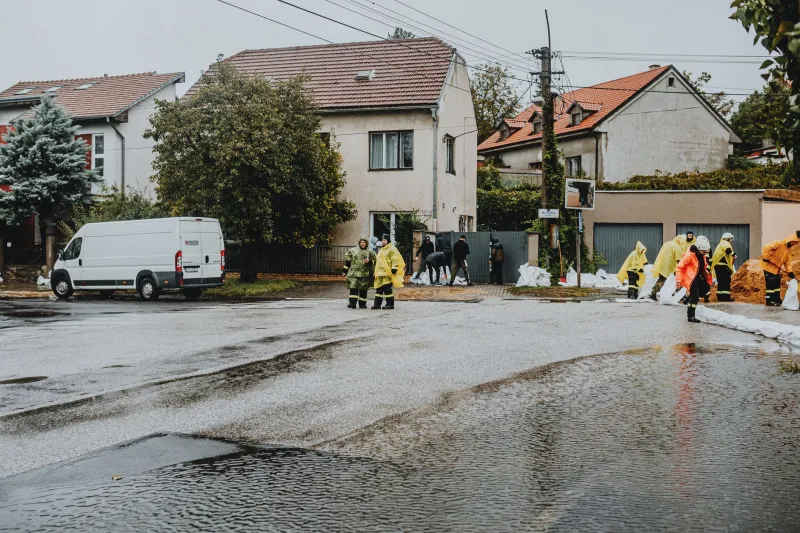
The third is flood risk. Climate change is altering the frequency and severity of both fluvial and surface water flooding events, and the Environment Agency's updated flood mapping is gradually reclassifying land that was previously considered low-risk. Developers who acquired sites on the basis of historical flood data are discovering that sequential test requirements and flood risk assessments are more demanding than they anticipated.
The Opportunity Within the Constraint
The conventional response to these challenges is to regard water-constrained regions as markets to avoid. This response, whilst understandable, is leaving significant value on the table.
The more sophisticated interpretation is this: in regions where water infrastructure is a genuine constraint, the developer who solves that constraint independently—through bespoke sustainable drainage, on-site water recycling, nutrient mitigation measures, or decentralised utilities—is not merely managing risk. They are creating a competitive advantage that is difficult to replicate and increasingly attractive to a specific class of investor.
Consider the nutrient neutrality challenge as an example. Developers operating in affected catchments have responded in a variety of ways: purchasing agricultural land to create nutrient credit offset schemes, partnering with water companies on wetland creation programmes, and investing in on-site treatment systems that demonstrably reduce nutrient export. Each of these approaches requires capital, expertise, and patience. But the developer who has built genuine capability in nutrient mitigation can unlock sites in areas where competitors have withdrawn—effectively operating in a market with dramatically reduced competition.
The same logic applies to sustainable drainage. A scheme that incorporates rain gardens, permeable paving, attenuation basins, and green roofs is not merely complying with planning conditions—it is producing a genuinely more resilient asset, reducing insurance exposure for future occupiers, and telling an ESG story that resonates with institutional investors who are increasingly scrutinising the long-term climate risk profile of residential assets.
The Commercial Case for Climate Resilience
The financial case for investing in water resilience is becoming clearer as institutional capital flows increasingly align with environmental, social, and governance criteria.
Large pension funds, sovereign wealth vehicles, and real estate investment trusts are under growing pressure from their own investors and regulators to demonstrate that their property portfolios are not exposed to systemic climate risk. A residential development that relies entirely on ageing mains infrastructure in a water-stressed catchment, or that sits in an area with known surface water flooding vulnerability, represents exactly the kind of asset that ESG-conscious investors are seeking to reduce exposure to.
Conversely, a scheme that generates its own water supply through harvesting and recycling, manages surface water entirely within its own boundary, and can demonstrate measurable nutrient neutrality is an asset that institutional investors can hold with confidence across a multi-decade investment horizon. The premium this attracts is not merely reputational—it is increasingly reflected in yield compression and reduced exit risk.
Developers who have recognised this dynamic early are structuring their schemes accordingly. Rather than treating water management as a cost of compliance, they are presenting it as a value-enhancing feature—commissioning independent assessments of long-term resilience, engaging with sustainability rating frameworks such as BREEAM and the Home Quality Mark, and producing investment memoranda that explicitly quantify the climate resilience premium.
Technical Pathways for Constrained Sites
For developers considering sites in water-stressed or nutrient-sensitive areas, the technical toolkit is more developed than many assume.
Sustainable drainage systems have advanced considerably beyond the attenuation tank buried beneath a car park. Contemporary SuDS design integrates water management with landscape quality, biodiversity enhancement, and community amenity—producing outcomes that planning authorities actively support rather than merely tolerate. Developers who engage specialist SuDS designers at the earliest stage of site appraisal consistently achieve better planning outcomes and lower whole-life costs than those who treat drainage as a late-stage engineering problem.
Water harvesting technology—collecting and treating rainwater or greywater for non-potable uses—has reached a level of reliability and cost-effectiveness that makes it viable for residential development at meaningful scale. Schemes that reduce mains water consumption by 30–40 per cent through harvesting are no longer experimental; they are increasingly standard among developers targeting sustainability accreditation.
For nutrient neutrality, the most robust solutions tend to involve a combination of on-site measures and off-site offsetting. The development of nutrient trading markets—facilitated in some catchments by Natural England and local nature recovery partnerships—is creating a more liquid market for nutrient credits, reducing the bespoke cost of individual mitigation schemes.
Building Where Others Cannot
The water infrastructure crisis is not going to resolve itself quickly. The capital investment required to upgrade Britain's sewage and water supply networks is measured in tens of billions of pounds, and the regulatory and financing frameworks for delivering that investment remain contested. In the interim, the constraint will persist—and in some regions, it will intensify.
For developers with the capability to operate independently of that constrained infrastructure, this creates a durable commercial advantage. The sites that are inaccessible to conventional operators remain available. The planning authorities in affected areas are actively seeking partners who can demonstrate genuine solutions rather than merely identifying problems. And the investor community is increasingly prepared to pay for resilience that is built in rather than bolted on.
At HMS Developments, we regard Britain's water challenge not as a reason to retreat from constrained markets, but as a reason to invest in the expertise that those markets demand. The developers who build that expertise now are not merely managing risk—they are positioning themselves at the frontier of Britain's most significant infrastructure transition, and the returns, for those with the patience to pursue them, are likely to be considerable.