Precision Built, Faster Delivered: The Factory Construction Revolution Reshaping British Development
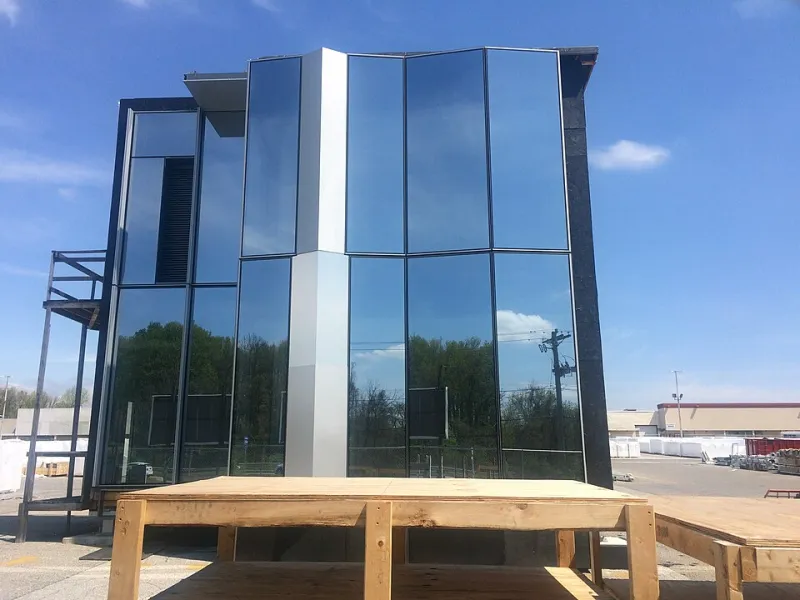
Photo: SamHolt6, CC BY-SA 4.0, via Wikimedia Commons
For much of the twentieth century, the phrase 'prefabricated housing' carried an unfortunate stigma in Britain — conjuring images of post-war emergency dwellings and the damp, poorly insulated temporary estates that blighted so many communities. Yet the construction sector of 2024 bears little resemblance to that era. Modern modular development is a sophisticated, engineering-led discipline, and it is quietly transforming the economics of residential and commercial delivery across the United Kingdom.
The timing of modular's emergence as a mainstream option is not coincidental. Britain's construction industry is facing a compound crisis: an ageing skilled workforce, post-Brexit labour market pressures, and the inflationary volatility that has made traditional build programmes financially precarious. Against this backdrop, factory-built housing has shifted from novelty to necessity for a growing cohort of developers.
The Core Economic Proposition
The financial case for modular construction rests on several interlocking advantages. The most immediate is speed. A modular scheme can typically be delivered 30 to 50 per cent faster than an equivalent traditionally constructed project, primarily because site preparation and module fabrication proceed simultaneously. In an environment where finance costs are elevated and planning delays have already consumed months before a spade enters the ground, compressing the construction phase materially improves project returns.
Labour costs represent the second pillar of the argument. Factory environments allow developers to replace expensive, weather-dependent on-site trades with a more controlled, efficient production process. Quality assurance is built into the manufacturing workflow rather than supervised retrospectively on a rain-soaked site in February. Waste, too, is dramatically reduced — factory construction generates substantially less material waste than conventional methods, which matters both financially and in the context of tightening embodied carbon regulations.
The third advantage is predictability. Traditional construction budgets are notoriously susceptible to variation orders, subcontractor disputes, and the cascading delays that arise when one trade overruns and displaces the next. Modular programmes, by contrast, offer a degree of schedule certainty that allows developers to manage investor expectations and drawdown facilities with far greater confidence.
Evidence From the Field
The modular sector has generated a growing body of real-world evidence in recent years. Legal & General's modular housing factory in Sherburn-in-Elmet, Yorkshire, represented one of the most ambitious attempts to bring industrial-scale precision to British housebuilding before its eventual restructuring — a reminder that the path to modular maturity is not without turbulence. Nevertheless, the lessons absorbed from that venture have informed subsequent, more commercially refined approaches across the sector.
Elsewhere, the picture is more consistently encouraging. Ilke Homes, prior to its administration, completed schemes demonstrating meaningful time savings on affordable housing contracts. Swan Housing Association's modular factory in Basildon delivered homes for its Essex development pipeline at consistent quality standards. In Scotland, the appetite for modular construction has been particularly pronounced, with several local authorities incorporating factory-built units into their affordable housing procurement frameworks.
For developers operating at the smaller end of the market, companies such as TopHat and Volumetric Building Companies have demonstrated that modular is not exclusively the preserve of large-volume operators. Bespoke low-rise schemes on constrained urban plots — precisely the kind of sites that might otherwise be deemed marginal — have been successfully delivered using volumetric and panellised systems.
Unlocking the Unviable Site
Perhaps the most compelling argument for modular construction in a development context is its capacity to unlock sites that traditional build methods have rendered uneconomical. Constrained urban plots with restricted access, sites adjacent to sensitive infrastructure, and locations where the logistics of conventional construction would generate prohibitive neighbour disruption are all candidates for a factory-built approach.
Consider a city-centre infill site where the delivery of ready-assembled volumetric modules over a single weekend — rather than months of material deliveries, scaffolding, and noisy groundwork — transforms the relationship with the surrounding community and the planning authority. Or a rural affordable housing scheme where the absence of local skilled trades would otherwise make conventional delivery unworkable. In both scenarios, modular does not merely offer a cost advantage; it makes the project possible at all.
Regulatory Friction and the Path Forward
Despite the compelling economics, modular construction in Britain continues to navigate a regulatory environment that has not yet fully adapted to its characteristics. The warranty and mortgage lending landscape has historically presented difficulties: some lenders have been reluctant to extend standard mortgage products to modular homes, particularly those constructed using certain structural systems. The Home Builders Federation and the wider industry have engaged with lenders and warranty providers to address this, and the position has improved considerably, but residual hesitation persists in pockets of the market.
Building regulations, whilst largely technology-neutral in principle, present practical complexities for modular manufacturers seeking to demonstrate compliance across multiple local authority jurisdictions. The government's ongoing work on a standardised type-approval process — analogous to frameworks operating in Scandinavia and Japan — would, if implemented effectively, substantially reduce the administrative burden and accelerate adoption.
Planning policy represents a further constraint. Many local plans were drafted with traditional construction in mind, and the appearance of modular homes — however well-designed — can attract aesthetic objections that reflect unfamiliarity rather than genuine design failure. Developers pursuing modular schemes would be well advised to invest in early pre-application engagement and, where possible, to commission high-quality architectural treatments that address visual concerns proactively.
A Maturing Proposition
The modular sector's early casualties should not obscure the broader trajectory. Factory-built construction is not a silver bullet, and it demands a different set of procurement disciplines, design-freeze timelines, and supply chain relationships than those to which the conventional development industry is accustomed. Developers who approach modular as a simple cost-cutting shortcut, rather than as a distinct methodology requiring genuine expertise, are likely to be disappointed.
For those who invest in understanding the model, however, the rewards are increasingly tangible. In a market where labour availability, cost certainty, and delivery speed have become existential concerns, the factory-built home offers a credible and scalable response. Britain's housing deficit is too large, and the traditional build pipeline too constrained, for the industry to ignore the advantages that precision manufacturing now places within reach.
At HMS Developments, we continue to monitor the evolution of modular construction closely, assessing its application across our project pipeline and evaluating the sites and programmes where factory-built methods offer the strongest strategic fit. The future of British housebuilding will not be built exclusively in factories — but the factories will play a far greater role than the industry has yet fully acknowledged.