Contamination as Competitive Advantage: The Inverted Economics of Britain's Most Polluted Sites
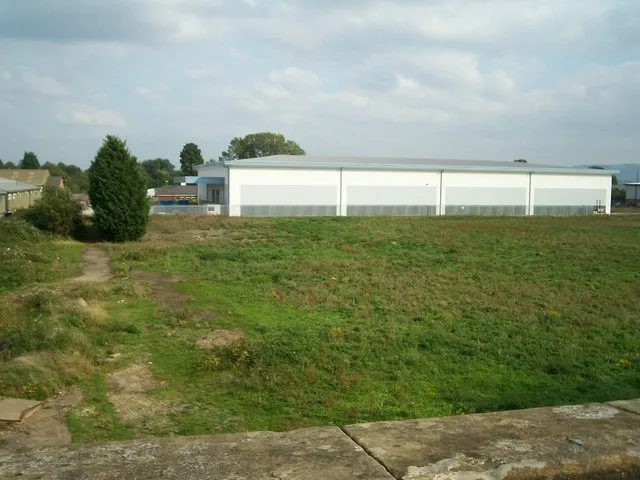
Photo: Jennifer Luther Thomas, CC BY-SA 2.0, via Wikimedia Commons
For decades, heavy contamination was treated as a development deal-breaker. Today, the most astute operators in British property are discovering that polluted brownfield land — once dismissed as unbankable — can yield margins that pristine greenfield sites simply cannot match. Understanding why requires a fundamental reassessment of how risk, regulation, and remediation technology now interact.
The Old Calculus No Longer Holds
Conventional wisdom once held that brownfield development was a last resort. Sites carrying the legacy of Victorian industry, post-war manufacturing, or fuel distribution were priced accordingly — vendors knew that any buyer would face remediation bills before a single foundation could be poured. The result was a market where contaminated land traded at steep discounts, yet those discounts rarely reflected the true cost of clean-up. Developers who ventured in often found themselves trapped between underestimated liability and a planning system that offered little reward for their environmental courage.
That equilibrium has shifted materially. Three forces — tightened planning policy, maturing remediation science, and a structural shortage of developable urban land — have conspired to invert the economics of contamination. The result is a paradox that rewards those who understand it and punishes those still operating on outdated assumptions.
Why Stricter Regulation Has Become a Developer's Friend
The Environment Act 2021 and successive updates to the National Planning Policy Framework have tightened the scrutiny applied to greenfield releases whilst simultaneously streamlining the pathway for remediated brownfield sites. Local planning authorities are under measurable pressure to demonstrate that brownfield capacity has been exhausted before granting permission on virgin land. This creates a structural bias that benefits developers willing to engage with contaminated sites.
Moreover, the Contaminated Land Regime under Part IIA of the Environmental Protection Act 1990 has become better understood by both practitioners and insurers. Where once contamination liability felt open-ended and unknowable, specialist legal and environmental consultancies have developed frameworks that allow developers to ring-fence risk with considerably greater precision. Remediation cost insurance — a niche product a decade ago — is now routinely available from Lloyd's market underwriters, allowing developers to cap their downside exposure in exchange for a premium that often represents a fraction of the land discount secured at acquisition.
The Remediation Technology Revolution
Perhaps the most consequential change has been technological. In-situ remediation methods — bioremediation, soil vapour extraction, permeable reactive barriers — have reduced both the cost and the timeline of treating contaminated ground. Where excavation and off-site disposal once represented the default approach, carrying costs measured in years and millions, contemporary techniques can treat hydrocarbon plumes, heavy metal concentrations, and chlorinated solvent contamination with far greater efficiency.
The practical consequence is that a site carrying moderate to severe contamination can now be rendered developable within twelve to eighteen months in many cases — a timeline that, whilst demanding, is no longer prohibitive when set against the land cost differential. A brownfield plot in a major English city might trade at forty to sixty per cent of the value of an equivalent clean site. If remediation consumes twenty per cent of that gap, the developer retains a meaningful land cost advantage that flows directly into margin.
Case Study: The Former Gasworks Model
Former gas production sites — known as manufactured gas plant sites or MGPs — represent one of the clearest illustrations of this dynamic. Scattered across British towns and cities, these plots carry well-documented contamination profiles: coal tar, benzene, cyanide compounds, and polycyclic aromatic hydrocarbons are common findings. Their contamination is severe by any measure, yet their urban locations are frequently exceptional.
Developers who have mastered the Phase I and Phase II environmental assessment process for MGP sites report that the planning pathway is, paradoxically, smoother than for many cleaner alternatives. Local authorities welcome the remediation narrative; it aligns with regeneration objectives, satisfies environmental obligations, and generates the kind of community goodwill that supports reserved matters applications. Several major residential schemes delivered in the East Midlands and South Yorkshire over the past five years have followed precisely this model — acquiring heavily contaminated former industrial land at significant discount, remediating under a documented and insured programme, and delivering completed units into markets where supply remains critically constrained.
The Intelligence Advantage
Succeeding in this environment demands a capability set that goes well beyond conventional development appraisal. Developers who are consistently extracting value from contaminated brownfield land share several characteristics. They maintain relationships with environmental consultancies capable of producing rapid desktop assessments. They understand the difference between a site with a complex but tractable contamination profile and one carrying liability that genuinely cannot be bounded. And they have developed internal protocols for phasing remediation expenditure in a manner that preserves cash flow during the planning period.
The ability to read a Phase II intrusive investigation report — to understand what the data is saying about lateral and vertical plume extent, about pathway and receptor relationships, about the likelihood of regulator sign-off — is no longer a specialist skill reserved for environmental engineers. It is increasingly a core competency for any development director operating in the brownfield space.
Greenfield Is Not the Safe Harbour It Appears
It is worth confronting the assumption that greenfield development is inherently lower risk. In the current planning environment, that assumption is increasingly questionable. Sites on the urban fringe face ecological survey requirements, nutrient neutrality constraints, and community opposition that can extend timelines by years. Section 106 obligations on greenfield permissions have escalated substantially, eroding the margin that once made edge-of-settlement development straightforwardly profitable.
Meanwhile, the political direction of travel — across both major parties — continues to favour urban densification over peripheral expansion. Developers who have built their business models around greenfield release are facing a structural headwind that brownfield specialists are not.
Building Value Where Others See Liability
At HMS Developments, the capacity to assess, structure, and deliver on contaminated brownfield land represents one of the defining disciplines of contemporary development practice. The sites that others decline to pursue are frequently the sites where the most durable value is created — not in spite of their complexity, but because of it. Complexity, properly managed, is a barrier to entry. And barriers to entry are where margins are preserved.
Britain's contaminated land is not a problem to be reluctantly tolerated. In the hands of developers with the technical literacy and financial discipline to engage with it properly, it is an asset class in its own right.