After the Barracks: The Extraordinary Development Potential Hidden Within Britain's Surplus Defence Estate
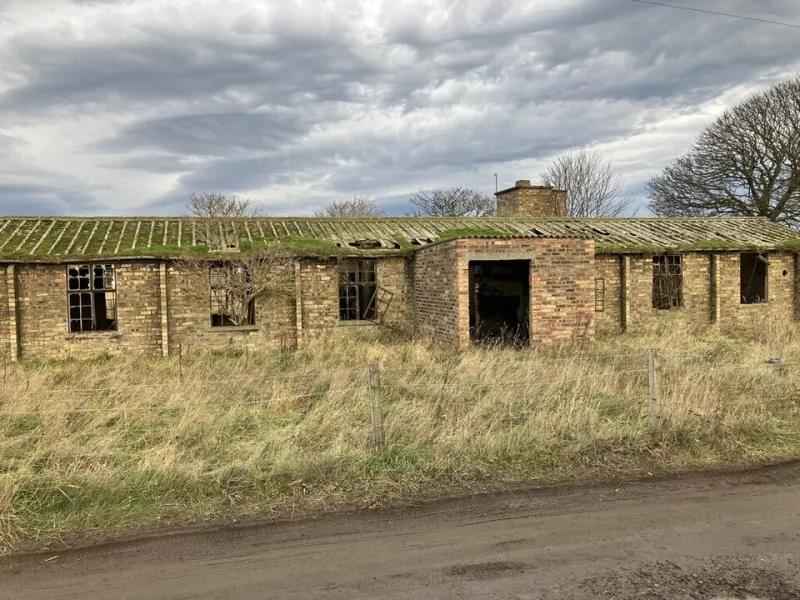
Photo: Dave Thompson , CC BY-SA 2.0, via Wikimedia Commons
After the Barracks: The Extraordinary Development Potential Hidden Within Britain's Surplus Defence Estate
They sit behind perimeter fencing that has not changed in decades, their guard rooms long unstaffed, their parade grounds slowly surrendering to weeds. Across Britain, from the chalk downlands of Wiltshire to the heathlands of Surrey and the windswept plains of Lincolnshire, former military establishments occupy land of extraordinary scale and, in many cases, extraordinary quality. The Ministry of Defence's ongoing programme of estate rationalisation — driven by changing strategic requirements, budget pressures, and the consolidation of personnel onto fewer, larger bases — has been releasing these sites into civilian ownership at a pace that the development industry is only beginning to fully absorb.
The numbers involved are significant. Since the early 2000s, the MOD has disposed of hundreds of sites across England, Scotland, and Wales, with further disposals projected as the defence estate continues to contract towards a leaner, more operationally focused footprint. The sites vary enormously in character — from compact urban barracks in established residential areas to vast former airfields on the rural fringe — but they share a set of characteristics that make them simultaneously compelling and complex as development propositions.
A Brownfield Category Unlike Any Other
Surplus defence land occupies a distinctive position within the brownfield development landscape. Unlike former industrial sites, which are typically defined by their contamination challenges, military establishments present a more varied profile. Some carry significant ground condition issues — fuel storage, ordnance residues, and decades of vehicle maintenance activity can leave a legacy that requires careful investigation and, in some cases, material remediation expenditure. Others are relatively clean, having been used primarily for accommodation, administration, or open training.
What almost all former military sites share, however, is a combination of infrastructure and isolation that creates both opportunity and complication. The MOD built its establishments to function as self-contained communities — with their own utilities, roads, drainage, and often their own healthcare, educational, and recreational facilities. For a developer, the existence of this infrastructure is genuinely valuable: it reduces the enabling cost that would otherwise be required to service a large-scale development site from scratch. Roads exist. Power is connected. Drainage networks, however aged, provide a starting point for detailed design.
The complication lies in the scale and the planning context. Former military sites are frequently located in areas where planning policy has historically protected the surrounding countryside, meaning that the case for residential development must be made carefully and with reference to both national policy support for brownfield delivery and the specific circumstances of each local authority area. The most successful approaches to securing consent on these sites have invariably involved early and sustained engagement with local planning authorities, often including formal pre-application discussions and, where appropriate, promotion through the local plan process.
Profiles in Potential: Sites Across the Country
The geography of surplus defence land reflects the strategic priorities of a different era, and it is not always aligned with contemporary housing market demand. Nevertheless, several recurring location types offer particularly strong development prospects.
Former garrison towns — Aldershot, Catterick, Colchester, and their equivalents — have grown up around military establishments and retain the transport links, schools, and commercial infrastructure that sustained large service populations. When barracks within or adjacent to these towns are released, they enter a market with established demand and planning authorities that have experience of accommodating military-to-civilian land use transitions. The Wellesley development at Aldershot, which has been transforming a substantial portion of the former Aldershot Garrison into a mixed residential community, offers a template for what patient, phased development on former military land can achieve.
Former RAF stations present a different but equally interesting proposition. Many were sited on elevated, well-drained land with good road connections — characteristics that served operational requirements and translate well into residential development. The long, straight runways and taxiways that define their layouts create unusual site geometry, but also opportunities for linear green infrastructure and cycling routes that give resulting developments a distinctive character. Several former airfields in the East Midlands and eastern England have been successfully promoted for large-scale residential development, often incorporating employment uses that reflect the industrial heritage of the site.
Perhaps the most complex — but potentially the most rewarding — category is the former research and specialist facility. Sites such as former signals establishments, research stations, and technical training centres often combine significant built heritage with intricate ground condition profiles. Their buildings may be listed or locally designated, creating both a planning constraint and an opportunity for the kind of sensitive conversion work that commands premium values in the current market.
Navigating the Heritage Dimension
Military heritage is a subject that engages communities, local historians, and planning authorities with considerable passion. Former barracks, officers' messes, and parade grounds are frequently the subject of listing applications when disposal is announced, and the development industry's relationship with the heritage sector on these sites has not always been harmonious.
The more productive approach — and the one that consistently produces better planning outcomes — is to treat the heritage of a former military site as an asset rather than a constraint. Buildings of genuine historic interest, sympathetically converted to residential or commercial use, create the kind of distinctive character that differentiates a development from the generic and commands measurable value premiums. The officers' mess that becomes a collection of lateral-conversion apartments, or the guardhouse that becomes a café at the entrance to a new community, tells a story that new-build alone cannot replicate.
Historic England's guidance on the development of former defence sites provides a useful framework for developers approaching these questions, and early engagement with heritage consultees — before positions have hardened — almost invariably produces more workable outcomes than adversarial approaches.
The Financial Architecture of Defence Land Development
The economics of former military land development are shaped by several factors that distinguish them from more conventional brownfield opportunities. Land acquisition from the MOD is typically conducted through a competitive disposal process, with the Defence Infrastructure Organisation (DIO) seeking to achieve best consideration on behalf of the public purse. This process, whilst transparent, can be challenging for developers seeking to factor in the full complexity of site-specific risks before committing to a price.
The most experienced operators in this space approach MOD disposals with detailed pre-acquisition due diligence — ground investigation, heritage assessment, utilities surveys, and planning risk appraisal — that allows them to price accurately rather than speculatively. The premium paid for this certainty is invariably justified by the avoidance of post-acquisition surprises that can fundamentally alter the viability of a scheme.
Phasing is a critical tool on large former military sites. Schemes of several hundred or several thousand units cannot be delivered or absorbed by the market simultaneously, and a phased approach — beginning with the most straightforward parcels to generate early revenue whilst longer-term planning and infrastructure work proceeds — is both financially prudent and practically necessary.
The Case for Patient Capital
Surplus defence land is not a sector for developers seeking rapid returns. The combination of complex planning processes, heritage obligations, phased delivery requirements, and the sheer scale of many sites means that the journey from acquisition to completion can span a decade or more. For investors and developers with the financial resilience and operational expertise to sustain that journey, however, the rewards are commensurate with the commitment.
Britain's defence estate rationalisation is a long-term structural process, not a one-off event. As the armed forces continue to adapt to twenty-first century strategic realities, further sites will enter the market. Developers who invest now in building the relationships, expertise, and track record required to compete effectively for these opportunities will find themselves well positioned to participate in one of the most distinctive — and potentially most significant — chapters in British development history.